Roy Vincent Trinidad, Armed Forces of the Philippines (AFP) Spokesperson for the West Philippine Sea (WPS), emphasized that the WPS is a matter of national concern during the “CommTalks Series 2026: Civilianizing the West Philippine Sea” masterclass held at the Nexus Atrium last Sept. 17.
In his discussion, Trinidad stated the WPS dispute adversely affects the daily reality of the public and is not strictly a military ordeal.
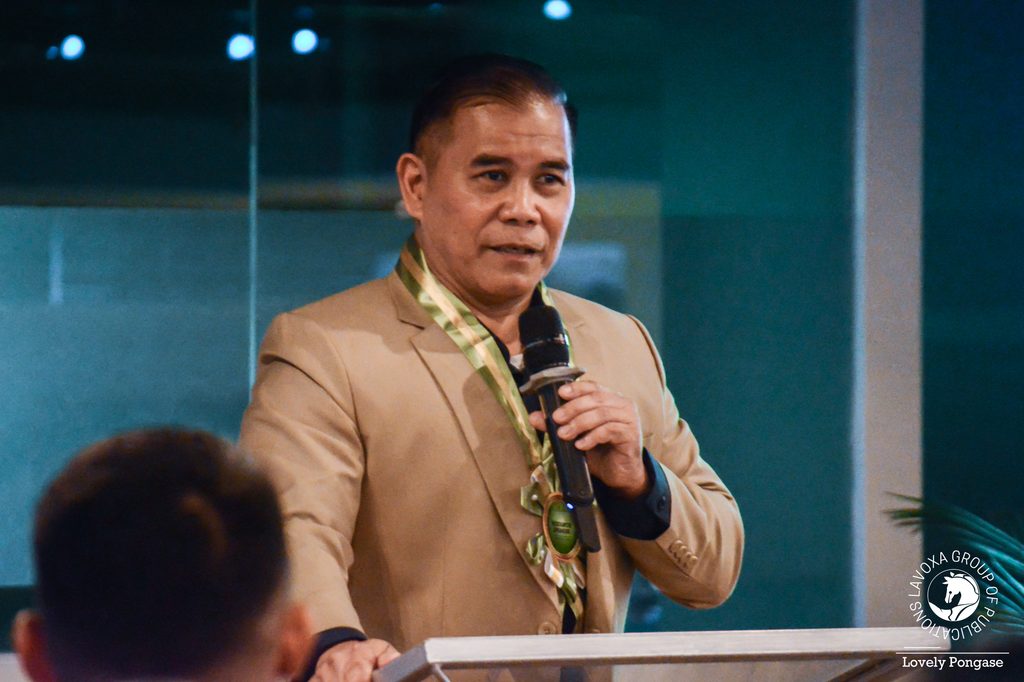
“It is very important for us to understand that the WPS is not a military problem, but a Philippine problem [since] that affects the way of life of Filipinos [in terms] ng tubig, pagkain, ilaw, education, basic needs, and economy,” said Trinidad.
He later explained that China utilized Illegal, Coercive, Aggressive, and Deceptive (ICAD) Actions and Messages to manipulate public perceptions on the issue.
“Their activities include use of water cannons, dangerous maneuvers, laser pointing, and tracking. All of these come with deceptive messaging […], that we are the ones who are steering up trouble in the South China Sea,” he added.
Amidst this disinformation campaign, Trinidad highlighted the role of communications and technology in advocating for truth.
“Before any physical conflict, there will already be [an] information warfare. […] As communicators, you are the number one to know the truth, […] [and] to communicate it. Communication is amplified by technology,” he said.
In an interview with Lavoxa Online, first-year AB Communication student Laurence Dalisay expressed that citizens must stand up against threats to national sovereignty.

“The most important lesson I learned is […] kailangan lumaban tayo whenever naaapi. […] dapat hindi nagagamit ng iba ang resources natin at hindi [ito] nadadamage ng ibang bansa […],” Dalisay said.
Meanwhile, Association of Communication Students (ACtS) Executive Secretary Gabriel Adrian Lacerna implored communication students to continue enlightening themselves on persistently disregarded issues like the WPS.
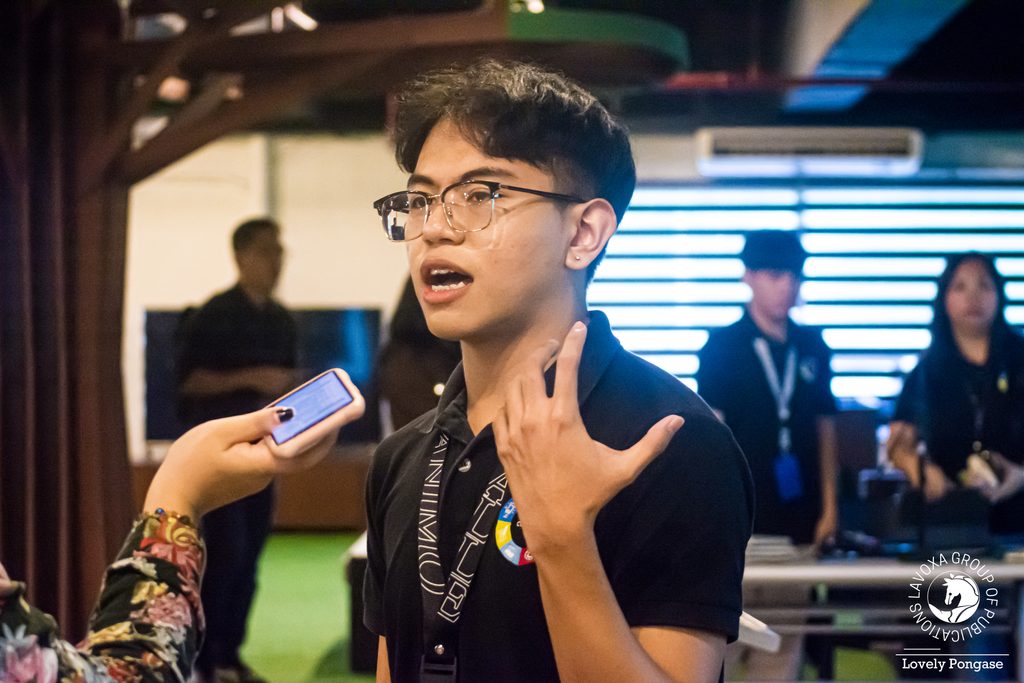
“We chose the WPS as the topic because it’s often overlooked, and rarely associated with communication. As communication students […], dapat alam at kita pa ‘rin natin kung ano ‘yung […] mga ongoing issues kahit napag-usapan na,” said Lacerna.
Co-organized by the De La Salle Lipa (DLSL) College of Education, Arts, and Sciences (CEAS) and the Association of Communication Students (ACtS), the program aims to spark meaningful conversations on social issues alongside communication and media practices among students and faculty.